Piercing Septum
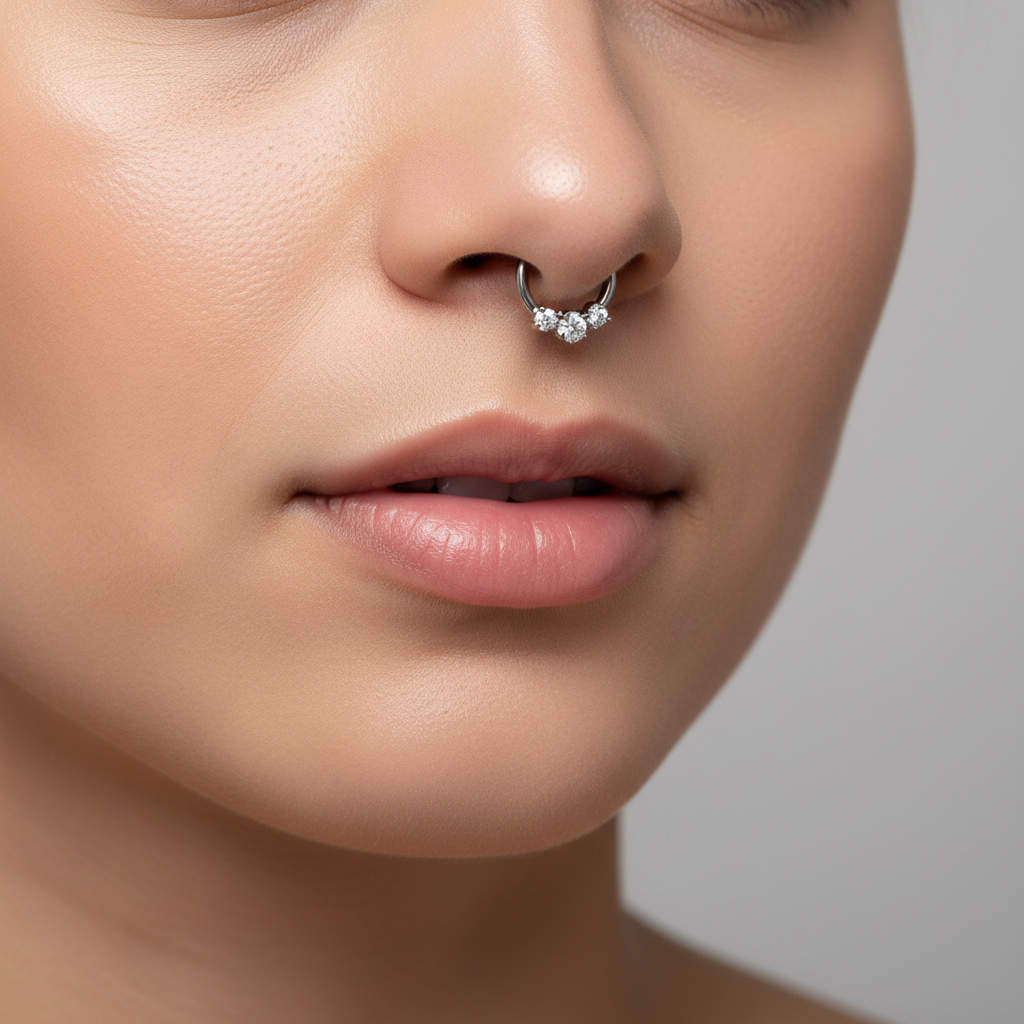
A septum piercing places jewellery in the area of the nasal septum; a professional determines placement after examining anatomy.
At a glance
Sizes are common reference ranges, not measurements of the image or a prescription for initial jewellery. A piercer chooses post length or inner diameter after assessing anatomy, placement and potential swelling; healed jewellery may differ.
Sizing and healing sources: Angel Art · Association of Professional Piercers
Who it suits and how to choose
- Diameter and shape change the emphasis beneath the nose: compare a small ring with a more visible horseshoe.
- A virtual try-on shows the look, while precise placement and sizing require an in-person anatomy assessment.
- Consider everyday comfort and how visible you want the jewellery to be; discuss construction with a qualified piercer.
History and features
Jewellery suspended from the nasal septum appears in different cultures, with different purposes and meanings.
The Metropolitan Museum describes Moche nose ornaments from Peru’s north coast, dated approximately 500–800 CE. Such objects could signal status and identity.
Contemporary septum jewellery takes many forms. The historical practices of particular peoples should not be presented as a single origin for every modern version.
Source: The Metropolitan Museum of Art ↗
Care and practical details
During healing, wash your hands before care and irrigate the piercing with sterile 0.9% sodium chloride wound wash 1–3 times daily. Gently pat dry with clean disposable gauze; do not rotate the jewellery or over-clean.
Do not change jewellery yourself during healing: discuss timing and any post downsize with your piercer. If pain or redness worsens, the area becomes hot, pus develops or you have a fever, seek medical care; do not remove jewellery without medical advice.
Aftercare guidance: Association of Professional Piercers · APP: troubleshooting