Glasses Sport Visor
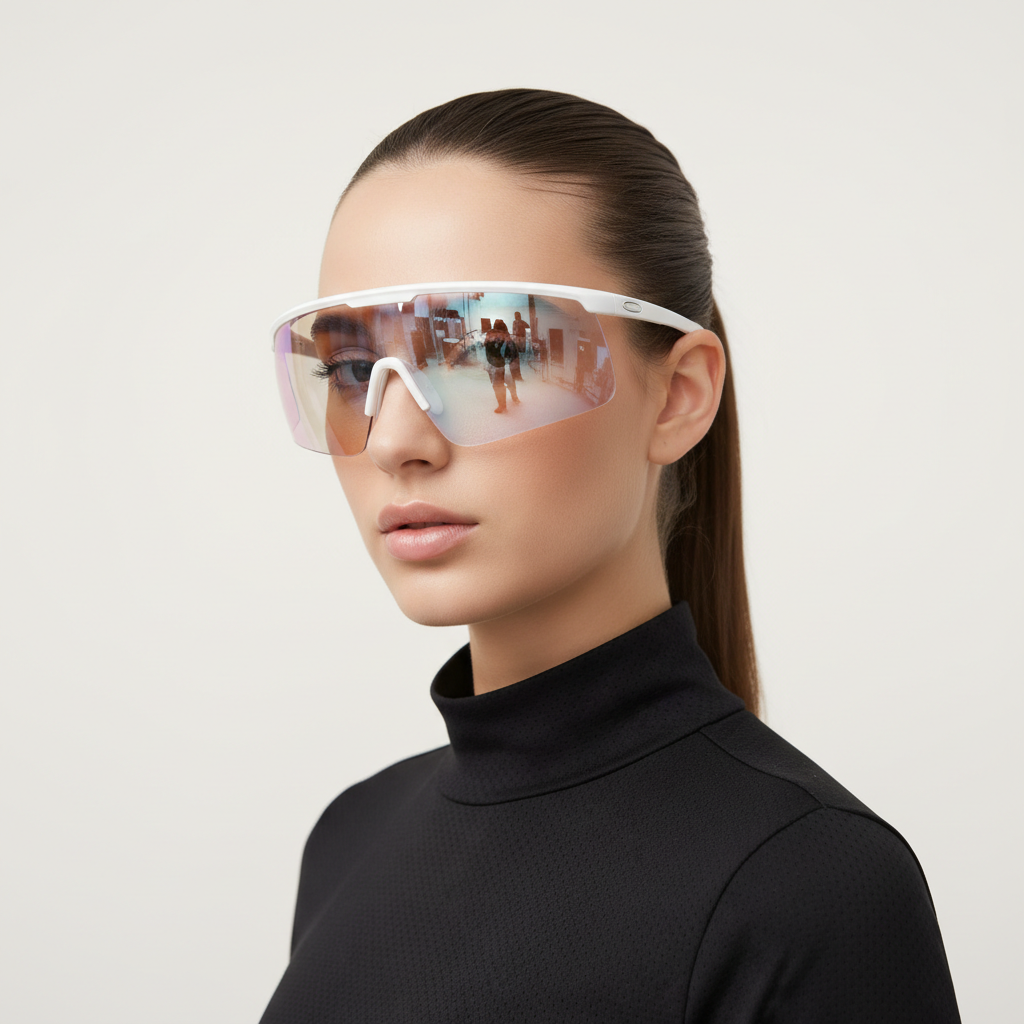
A sports visor uses a wide curved lens and a close fit suited to movement.
At a glance
LensWide one-piece shield
ShapeCurved
CoverageExtended
FitClose to face
VentilationVaries by model
UseSport and activity
These describe the shape and common variations; individual models may differ.
Who it suits and how to choose
- Check the fit while moving: the visor should stay secure without strong pressure on the nose or temples.
- A wide shield stands out on a smaller face; compare it with a compact sports frame.
- For actual sport, check helmet compatibility, ventilation and the manufacturer’s stated lens protection.
History and features
Modern sports visors developed under the influence of protective goggles and the need for a broad view while moving.
In 1984 Oakley introduced Eyeshade; the company traces an early prototype to a motocross goggle lens. This is one example of the form’s development, not the origin of every visor.
Today similar silhouettes appear in sports and fashion. A particular pair’s protection depends on its construction and markings.
Source: Oakley — eyewear heritage ↗
Care and practical details
Store glasses in a case, clean lenses with an appropriate cloth and check the fit of the temples.