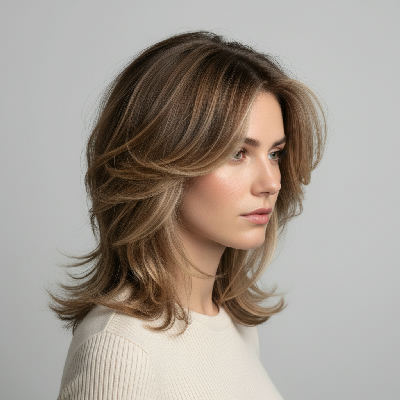
Airy volume
- 1Apply heat protectant and mousse to damp hair.
- 2Lift the roots as you dry and direct the face-framing layers away from the face.
- 3Shape the ends with a round brush if needed.
- 4Separate the layers with your fingers and add a light spray.
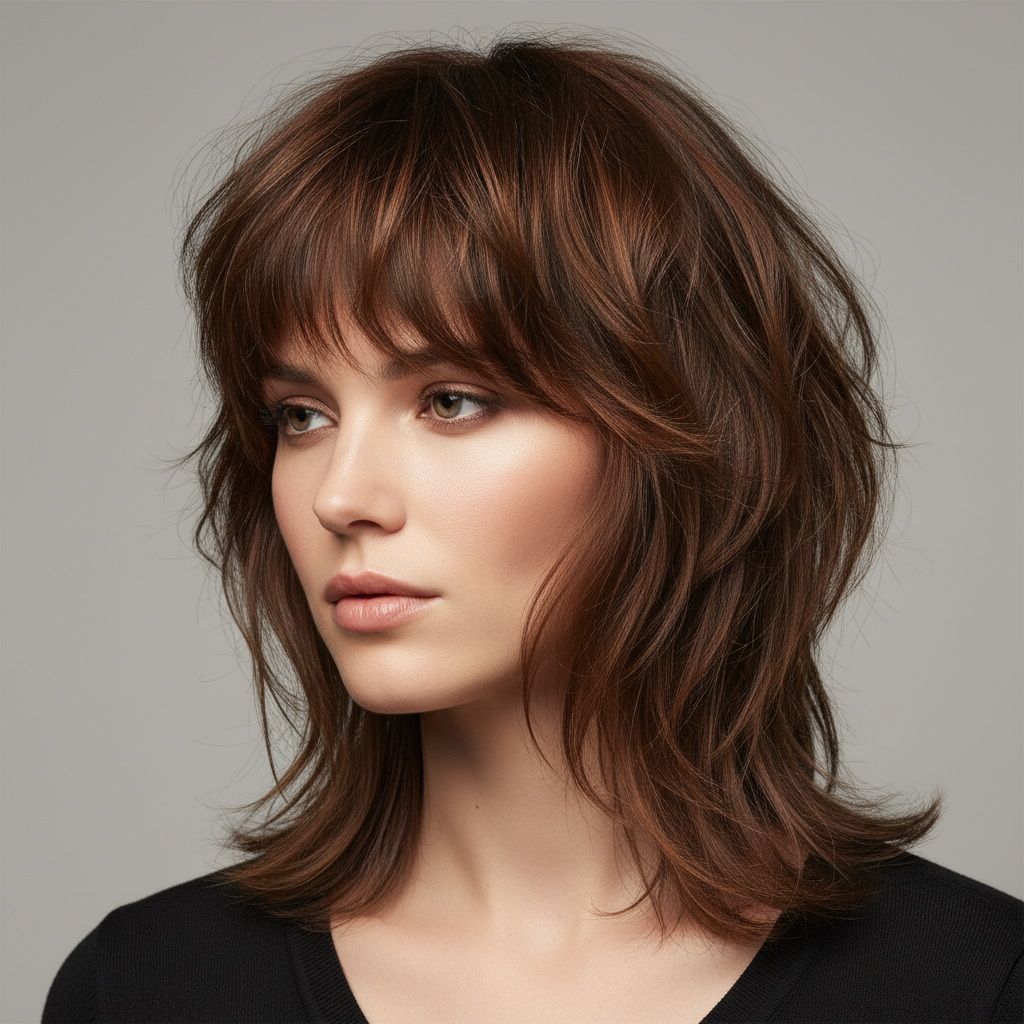
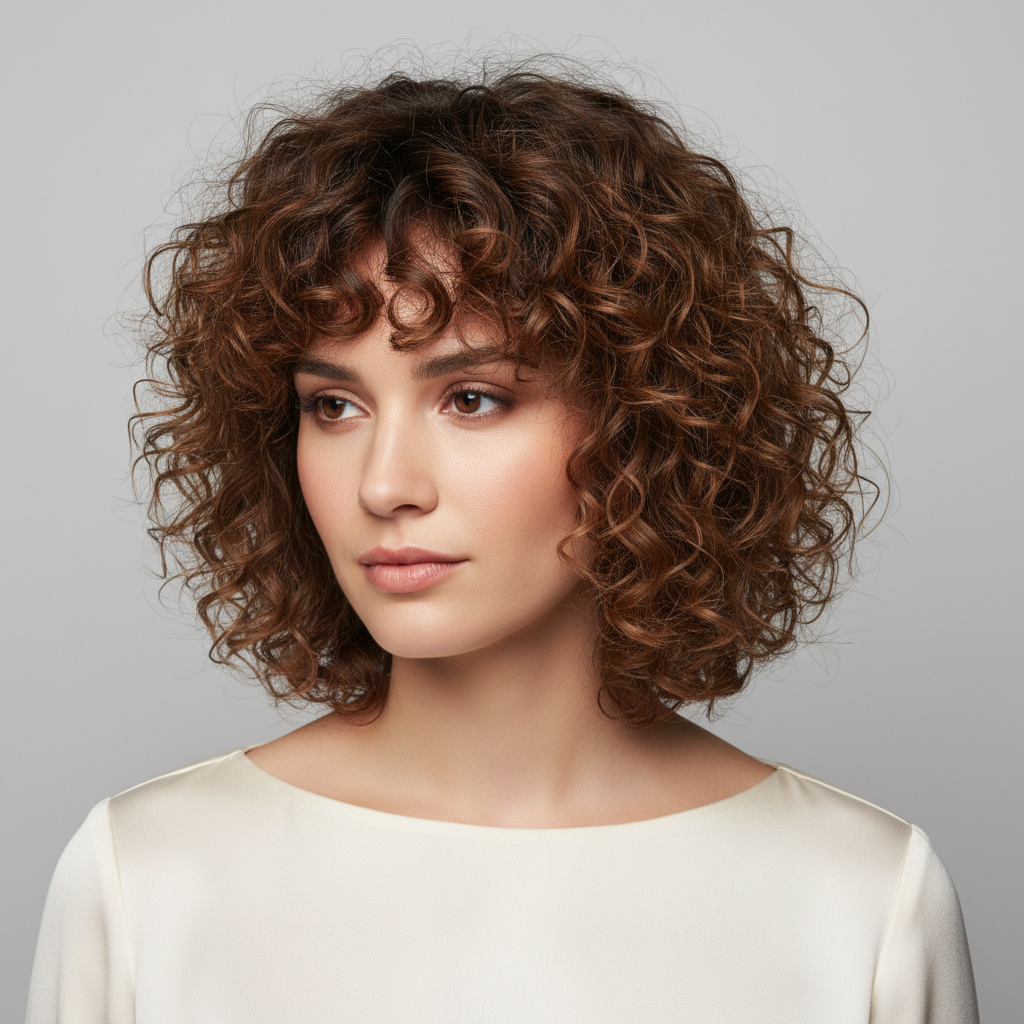
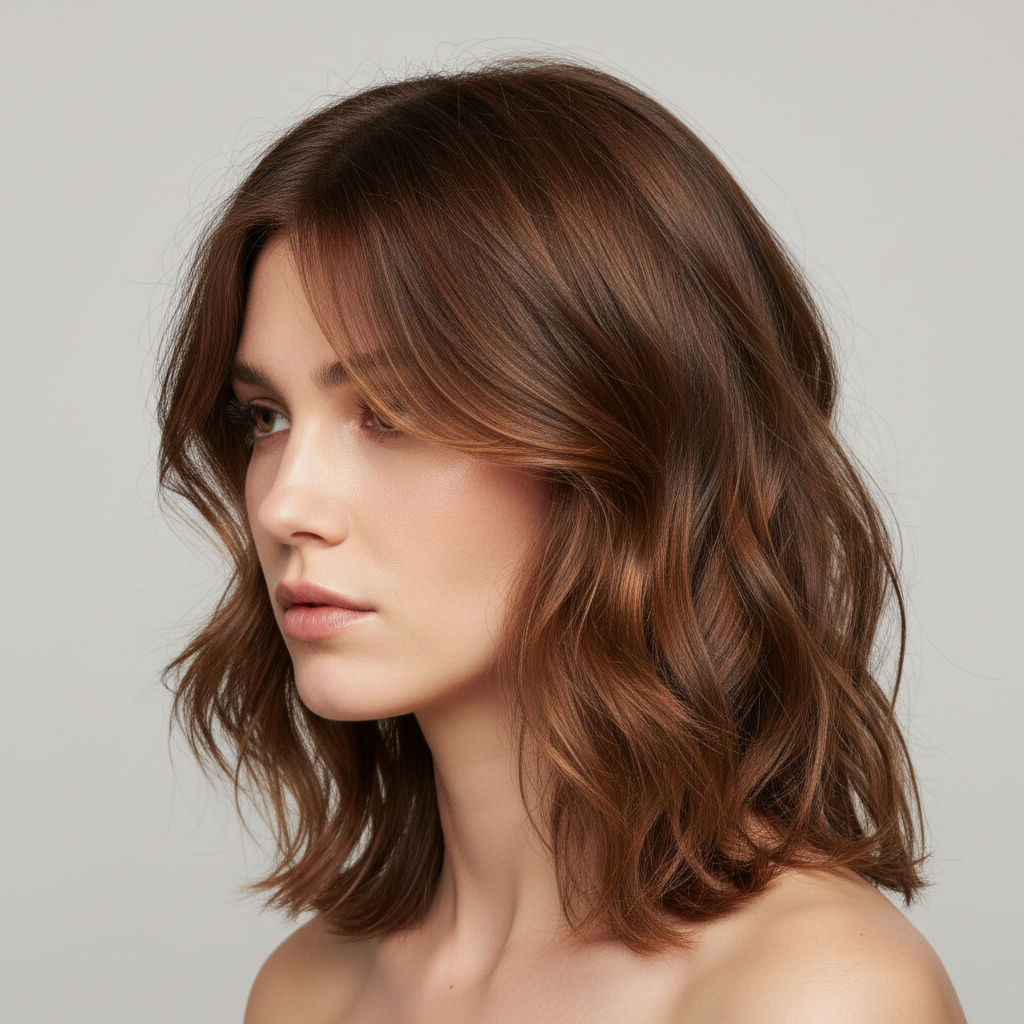
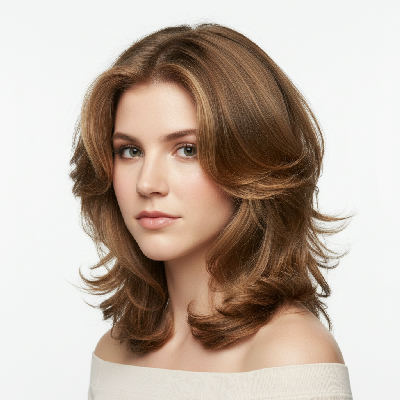
A shag is built from soft, abundant layers: more lift sits around the crown while the ends feel lighter and loose. A fringe often completes the silhouette, but it is optional.
These are general pointers. Choose the exact length and shape with your stylist, considering your growth pattern, texture and routine.
History and aesthetics
1970s — screen and rock styles make the shag recognizable
Jane Fonda helped bring the shag into wider view in the 1971 film Klute, where a fringe and face-framing layers became part of her screen image.
Similar shapes were later worn by musicians and actors across generations. Today the shag ranges from soft and voluminous to choppier; its character depends on length and layer density.
Historical source: Vogue — how the shag became a signature cut ↗
The layers show their movement best when hair has natural texture; very straight hair may need extra styling.
Ask for soft crown and face-framing layers, and be specific about how strong you want the fringe and texture.