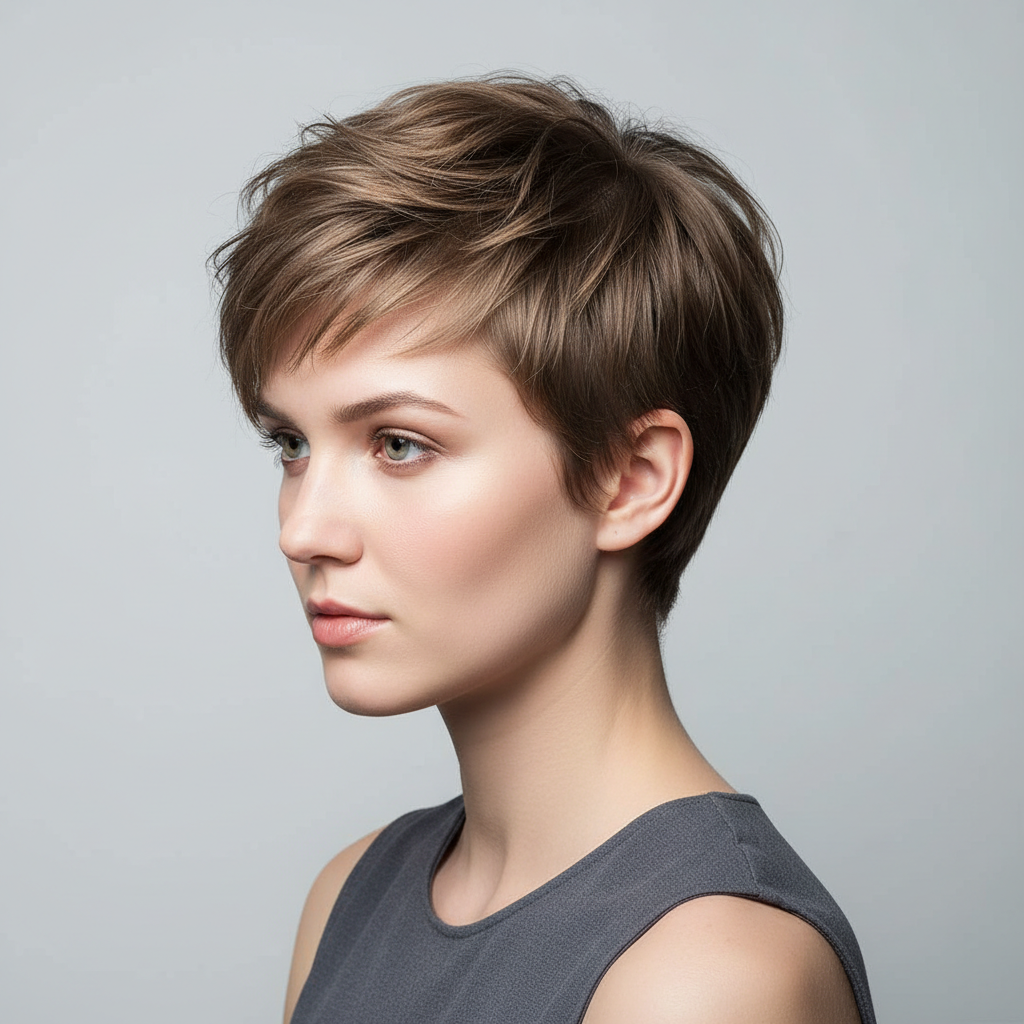
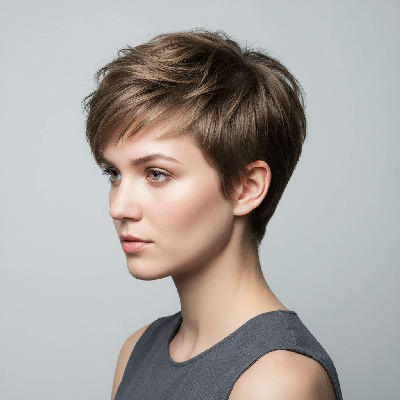
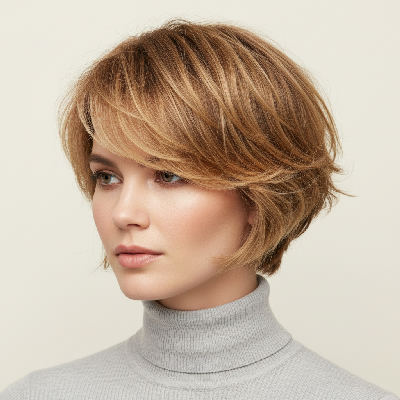
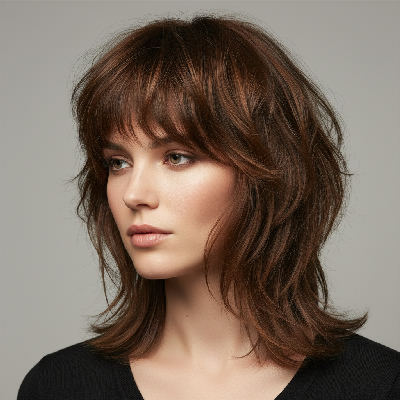
Soft shape
- 1Apply heat protectant to damp hair.
- 2Blow-dry with your fingers, directing the fringe to one side.
- 3Lift the crown while keeping the temples smoother.
- 4Define a few pieces with a drop of lightweight cream.
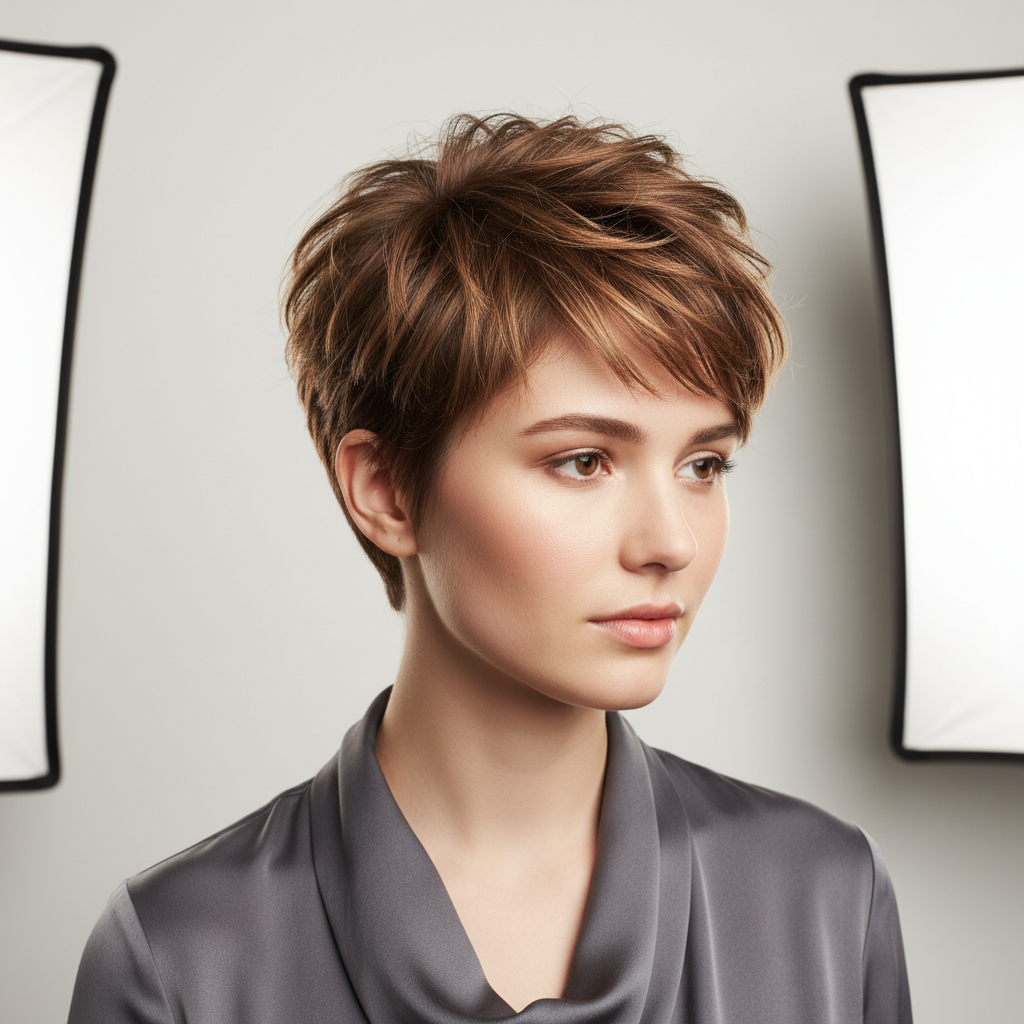
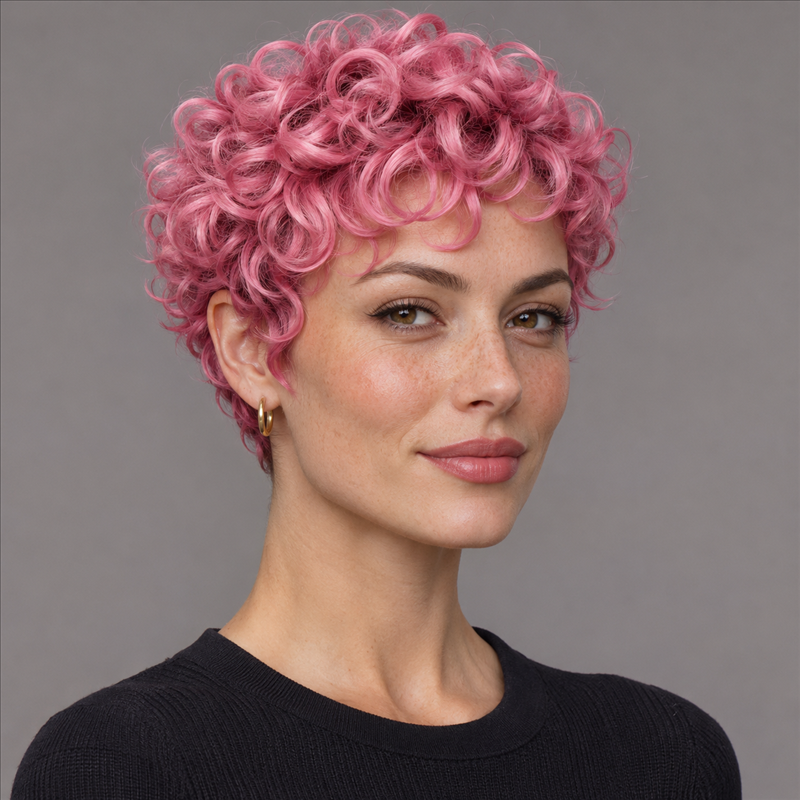
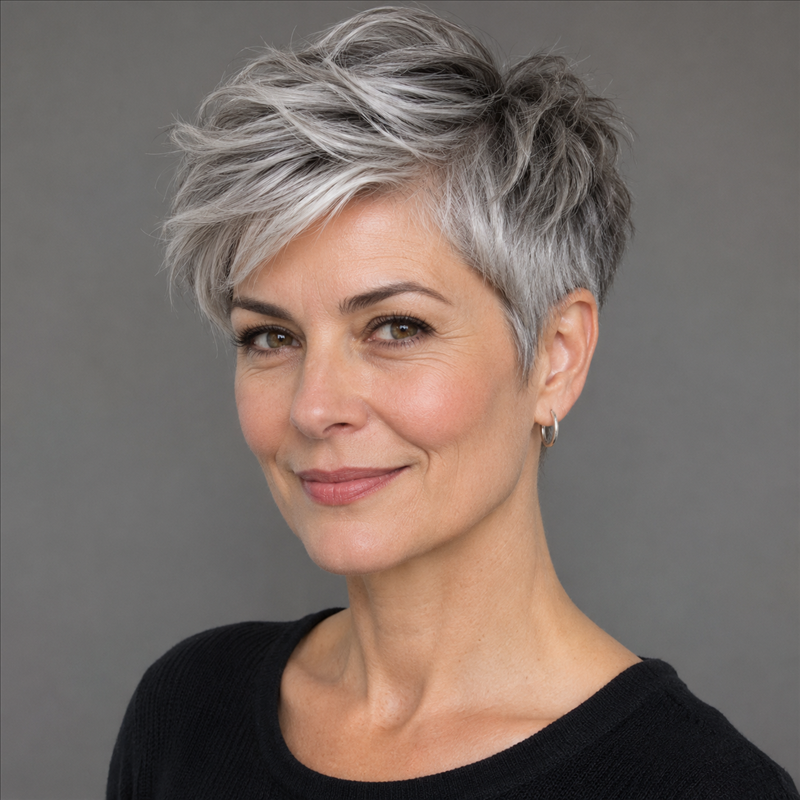
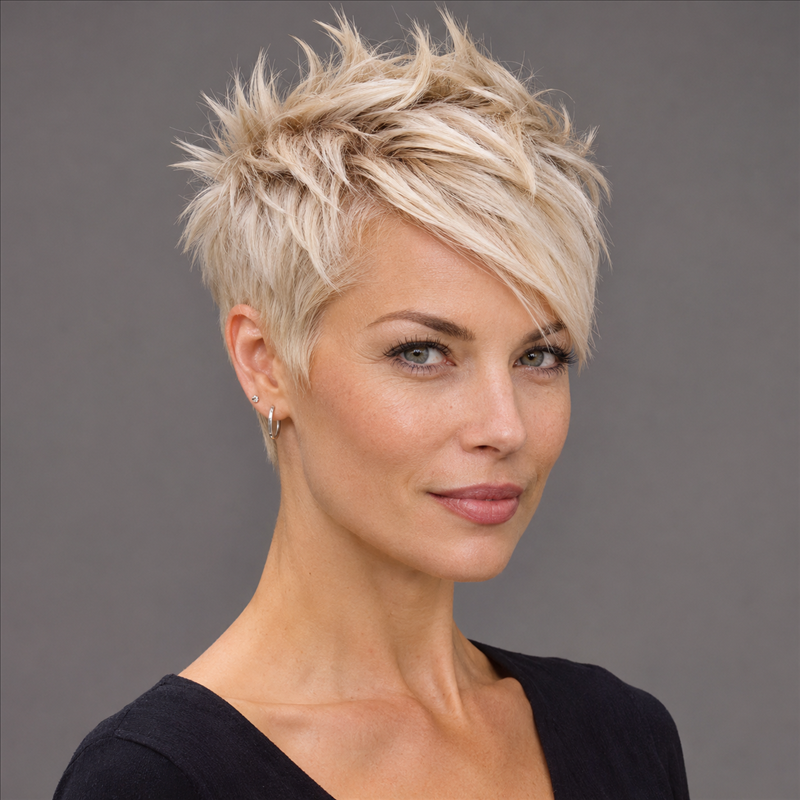
A textured pixie keeps a short base while leaving movement through the top and fringe. Small changes in length and direction can make it soft, graphic or deliberately tousled.
These are general pointers. Choose the exact length and shape with your stylist, considering your growth pattern, texture and routine.
History and aesthetics
Mid-20th century — the pixie enters the modern image
Short haircuts for women existed long before the modern pixie, but its familiar silhouette gained wider attention in the mid-20th century. Audrey Hepburn and Jean Seberg helped make short hair a visible part of screen style.
A textured version develops the shape through layers and movement. It can look polished or relaxed depending on how the pieces are defined.
Historical source: Vogue — history of the pixie cut ↗
Textured layers can reveal cowlicks and growth patterns, so ask your stylist to account for them.
Discuss the length of the fringe and crown, and show how you usually style your hair.